Easy Oven-Baked Plum Jam (No Added Sugar)
This oven-baked plum jam with no added sugar is how I deal with plums when they all ripen at once. I absolutely love plums. Every year I look forward to them ripening, and then, as so often happens with fruit growing at home, they’re all ready at the same time. Suddenly there are more plums than we can eat or use right away.
Read this recipe in Slovenian →
I love making plum dumplings, but even those only use up so many. One of my favorite ways to preserve the rest is this simple oven-baked jam.
What I love most is how little work it takes. You just wash, halve and pit the plums, then let the oven do the rest. As they slowly roast, the fruit softens, some of the liquid evaporates and the flavor gets deeper and more concentrated.
Ripe plums have plenty of natural sugar, so there’s no need for white sugar, preserving sugar or any other sweetener. That makes them especially well suited to a simple, naturally sweet jam, and roasting them in the oven is by far my favorite way to make it.
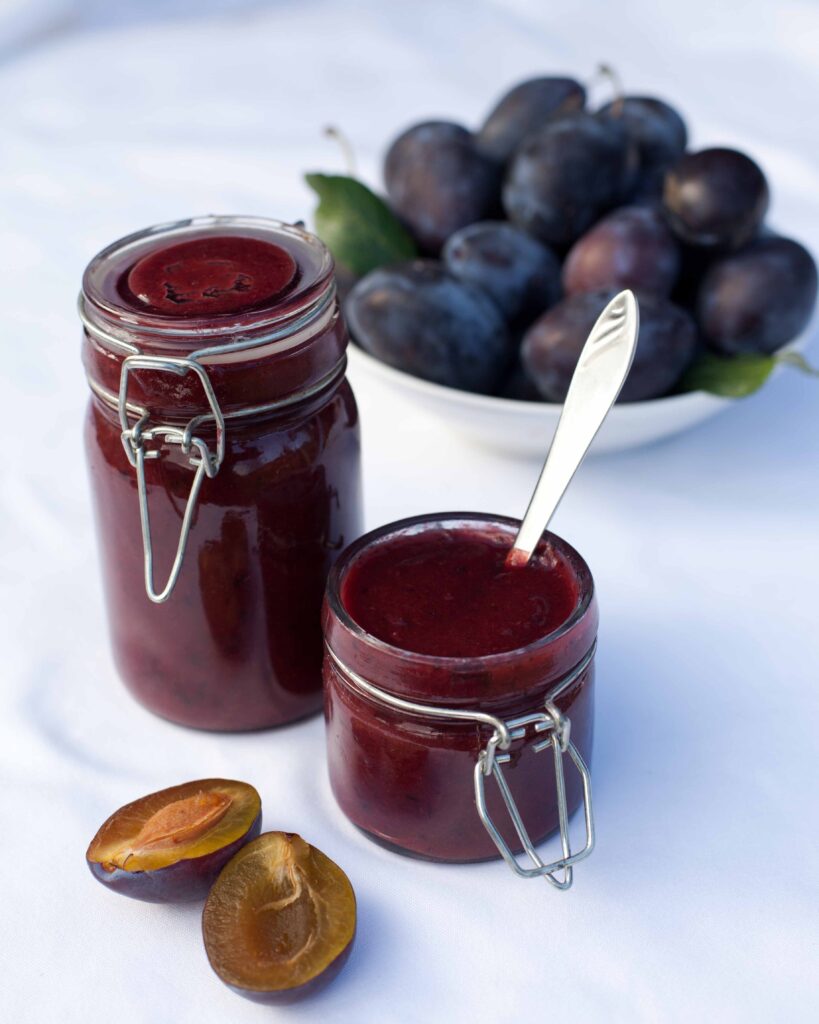
A chunky, juicy jam you can use in many ways
Although I call it plum jam, its texture is closer to a chunky homemade fruit spread. I like to leave it slightly loose rather than blending it completely, because I love finding soft pieces of roasted plum throughout.
If you prefer a smoother jam, blend the roasted plums with an immersion blender. You can also adjust the thickness simply by changing the roasting time: the longer the plums stay in the oven, the more liquid evaporates and the thicker the jam gets. Just remember that it keeps thickening a little as it cools.
The juicy texture and pieces of fruit make this jam wonderfully versatile. It’s delicious on bread or pancakes, but you can also use it as a fruity filling for cake rolls, pies and other desserts, or swirl it into creams and yogurt.
What kind of plums are best for jam?
You can make this jam with any variety. The most important thing is to choose plums that are fully ripe, unspoiled and flavorful.
In my experience, the best jam comes from plums with a little natural acidity alongside their sweetness. That doesn’t make the jam taste sour. It gives it a deeper, brighter and more aromatic flavor. If the plums are only very sweet, the finished jam can taste a bit flat.
The variety we grow at home is Čačanska Rana, and it works beautifully here. The plums have a rich, dark color, a lovely aroma and just enough acidity to make the roasted jam taste especially vibrant. But you can use whichever variety you can get. The simplest test is to taste one: if the plum tastes delicious on its own, it will most likely make delicious jam too.
Even when fully ripe, plums should be free from mold, rot or any sign of fermentation. Very soft or slightly wrinkled fruit can still be perfectly fine, as long as it smells fresh and shows no sign of spoilage.
How long does oven-baked plum jam take?
Roast the plums at 320°F (160°C) in a conventional oven, or at about 290 to 300°F (145 to 150°C) in a convection oven. They usually need 1½ to 2 hours, although the exact time can vary.
It depends on how juicy the plums are, how many you put in the pan and how thick you want the jam. In a larger roasting pan, where the fruit is spread in a shallower layer, the liquid evaporates faster. A deeper layer of plums takes a little longer.
Stir or turn the plums once or twice during roasting so they soften evenly. The jam is ready when the fruit has broken down, some of the liquid has evaporated and you have a juicy spread with soft pieces of plum.
I don’t roast it until it’s very thick. I prefer it soft and spreadable, so I can also use it in desserts. Since it keeps thickening as it cools, it should still be slightly looser than your ideal consistency when you take it out of the oven.
Does this plum jam contain sugar?
When I say no added sugar, I mean exactly that: no sugar has been added. Plums naturally contain sugar, especially when they’re fully ripe.
That natural sweetness is what makes ripe plums so well suited to jam. If you choose flavorful, ripe fruit, you don’t need white sugar, preserving sugar or other sweeteners. During slow roasting, some of the water evaporates and concentrates both the flavor and the natural sweetness of the plums.
The final taste depends on the variety you use. Very sweet plums make a sweeter jam, while plums with some natural acidity make a brighter, more aromatic spread. So this jam isn’t free from all sugar, but it’s made entirely from fruit and contains no added sugar.
Is it suitable for people with diabetes?
No added sugar doesn’t mean the jam won’t affect blood glucose. Plums contain natural sugars, and they become more concentrated as the water evaporates during roasting.
For that reason I can’t say this jam is suitable for everyone with diabetes. A sensible portion depends on the person, their overall diet and how their diabetes is managed. If you’re unsure, talk to your doctor or a registered dietitian.
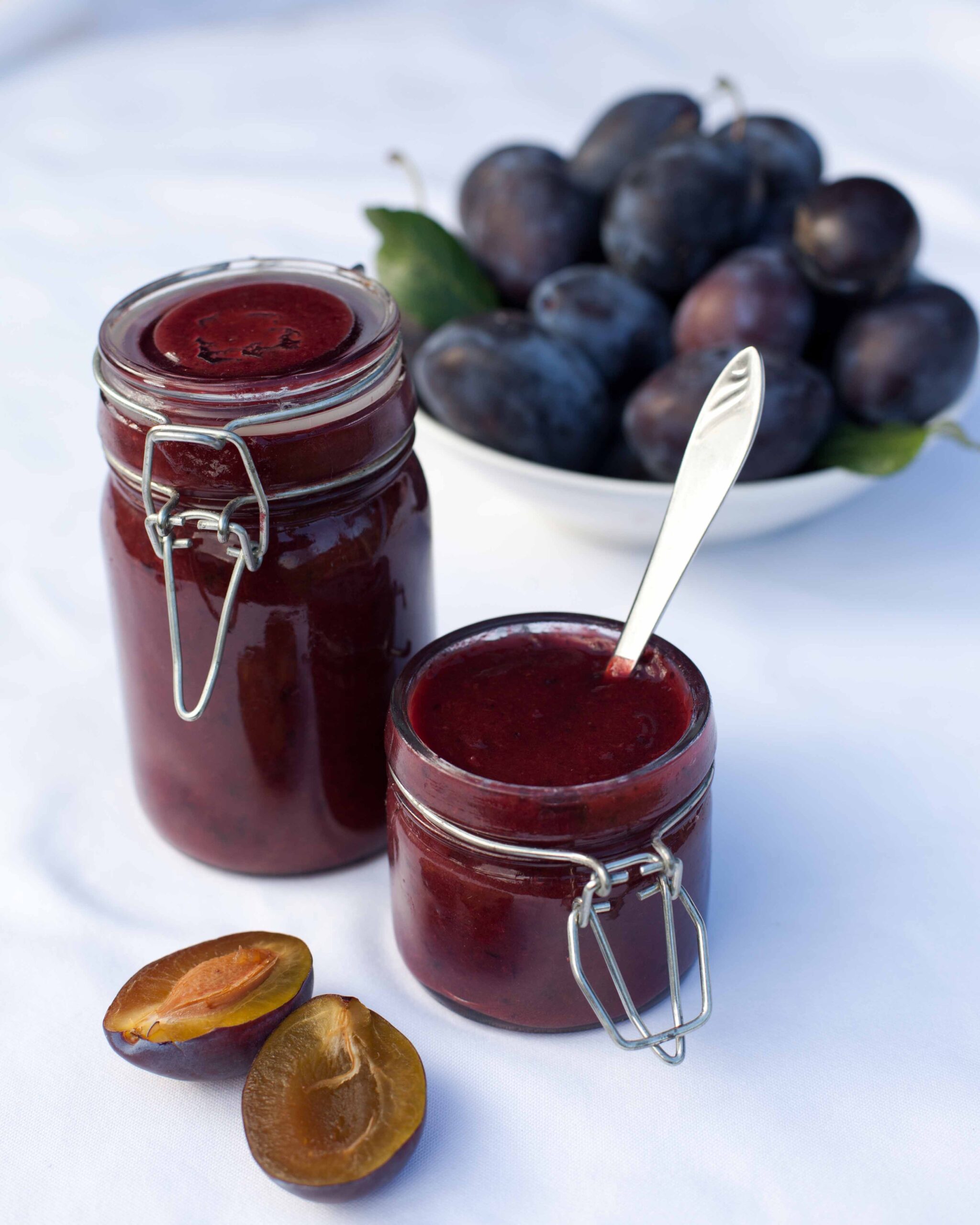
Easy Oven-Baked Plum Jam (No Added Sugar)
Ingredients
- 2 kg ripe plums weighed after pitting
Instructions
- Wash the plums, cut them in half and remove the pits. Discard any damaged, rotten or fermented fruit.
- Weigh the prepared plums and arrange them in a large baking pan, cut side up.
- Preheat the oven to 160°C using conventional heat, or 145–150°C in a convection oven.
- Roast the plums for approximately 1½ to 2 hours. Stir or turn them once or twice during roasting so that they soften evenly.
- Once the plums are completely soft and some of the liquid has evaporated, check the consistency. Do not roast the jam until it is completely firm, as it will thicken slightly as it cools.
- If you like pieces of fruit in your jam, lightly mash the roasted plums and stir well. For a smoother jam, blend them with an immersion blender.
- Heat the clean jars before filling so that they are hot when the jam is poured into them.
- Immediately pour the hot plum jam into the hot jars and seal them tightly.
- Place the sealed jars in a deep baking pan. Bring some water to a boil and carefully pour it into the bottom of the pan.
- Place the pan in the oven and pasteurize the jars at 85°C for 30 minutes. This time applies to hot jars filled with hot jam. If the jars or jam have cooled before pasteurization, extend the time accordingly.
- Turn off the oven and leave the jars inside until they have cooled slowly and completely. Alternatively, carefully remove them from the oven, wrap them in a blanket and allow them to cool slowly.
- Store the completely cooled jars in a dark, dry and cool place. Once opened, keep the jam refrigerated and use it as soon as possible.
Notes
- Adjust the roasting time according to how juicy the plums are and how thick you want the jam to be. Remember that it will thicken slightly as it cools.
- For a smooth jam, blend the plums with an immersion blender. For a more rustic texture, leave some pieces of fruit.
- Use only ripe, healthy plums with no signs of fermentation.
- Pour the hot jam into hot jars and pasteurize immediately. Once opened, keep refrigerated and use within one to two weeks.
How long can you store homemade plum jam?
Store the pasteurized, completely cooled jars in a dark, dry, cool place. Before putting them away, check that the lids have sealed properly. Prepared this way, unopened plum jam keeps in my pantry for several years. Once a jar is open, keep it in the fridge and use it as soon as you can.
That’s why I like filling smaller jars. An opened jar doesn’t sit around for long and is easily used up within one to two weeks.
My favorite ways to use oven-baked plum jam
Plum jam is delicious on bread or pancakes, but I especially love using it in other desserts. Because I leave it slightly juicy and keep some pieces of roasted plum, it adds not only sweetness but also real fruit flavor and texture.
One of my favorite combinations is plum jam with homemade coconut yogurt. A spoonful turns plain yogurt into a fruity dessert or breakfast in moments.
You can also use it as a filling for spelt pancakes or gluten-free millet pancakes, and it’s equally good in homemade jam-filled buns. You can leave the plum pieces intact or quickly blend the jam first.
I also love it in cake rolls, sponge cakes, pies and different creams. When I need a completely smooth fruit filling, I blend it with an immersion blender. Otherwise I leave it just as it is, juicy and full of soft roasted plum.
Oven-baked plum jam FAQ
Can I use frozen plums?
Yes. You don’t need to thaw them first. Put them in the baking pan while still frozen and let them thaw in the oven as they start to roast.
Frozen plums release more liquid, so the jam needs a longer roasting time. Once the plums have thawed and softened, stir or turn them now and then and keep roasting until enough liquid has evaporated and the jam is as thick as you like.
Do I need to add sugar or a gelling agent?
No. If you use ripe, flavorful plums, you don’t need to add sugar. The jam thickens as the liquid slowly evaporates from the plums during roasting, so there’s no need for agar agar or any other gelling agent.
How often should I stir the jam while it roasts?
Stir or turn the plums once or twice while they roast. Check more often toward the end, especially once most of the liquid has evaporated, because the jam can start to stick around the edges of the pan.
Why is my plum jam too runny?
The roasting time depends on how juicy the plums are, how many you use and the size of your pan. If the jam is too runny, roast it a little longer so more liquid can evaporate. It will also thicken further as it cools.
Can I blend the jam?
Of course. I prefer to leave soft pieces of roasted plum in the jam, but you can blend it with an immersion blender for a smoother texture. That’s especially handy when you want to spread it over a sponge cake, use it as a filling for cake rolls or add it to creams.
How long can I store the plum jam?
Prepared and pasteurized this way, the jam keeps in my dark, dry, cool pantry for several years. Before storing the jars, check that they’ve sealed properly. Once opened, keep the jam in the fridge and use it within one to two weeks.
How did your plum jam turn out?
Did you make this oven-baked plum jam? I’d love to see it! Send a photo to hello@naturallyindulgent.com and tell me which plums you used and whether you left the jam chunky or blended it smooth.
Your jam might even be featured here and inspire someone else to try the recipe. 😊
By sending a photo, you agree that I may publish it on the Naturally Indulgent website.
More plum and fruit recipes you’ll love
Recipes marked (Slovenian) haven’t been translated yet.
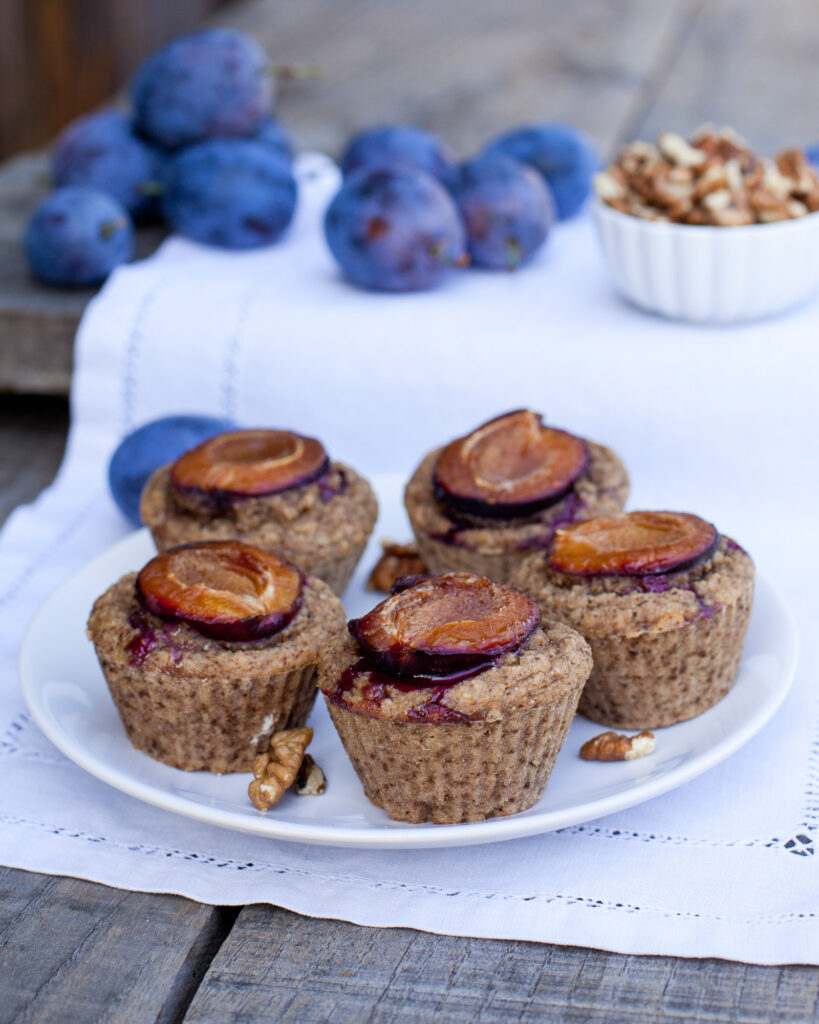
Plum and Walnut Muffins
Easy Plum and Walnut Cake (No Added Sugar)