Easy Fig Jam Without Added Sugar
If you’re looking for an easy fig jam without added sugar, this simple homemade recipe is a lovely way to preserve the flavor of late summer. It’s made with ripe figs, apples and 100% grape juice, with no preserving sugar or artificial additives.
Read this recipe in Slovenian →
Late summer in a jar
Figs have always felt special to me. As a child I associated them with the seaside: narrow coastal roads, local people selling fruit by the roadside and branches heavy with ripe figs hanging over garden walls. Every now and then I’d find one that was perfectly soft and sweet, with a flavor I could never quite find at home.
Today fig trees grow beautifully in Prekmurje too, and I’m lucky enough to have one in my own garden. The fruit that once tasted like the sea and summer holidays now ripens just outside my door.
When the first figs are ready, I always want to eat them fresh. I tell myself we’ll eat them as we go this year. Then a few really sunny days come. One day they’re still hard, and a few days later there are so many that you simply can’t eat them all.
That’s when I make this jam. It almost makes itself, and I hate to let such beautifully ripe figs stay on the tree. For me it’s one of the loveliest ways to keep the last days of summer for slow autumn breakfasts.
Why I add apples to fig jam without added sugar
I’m often asked whether fig jam can really turn out well without added sugar. The answer is yes, especially when the figs are fully ripe and naturally sweet.
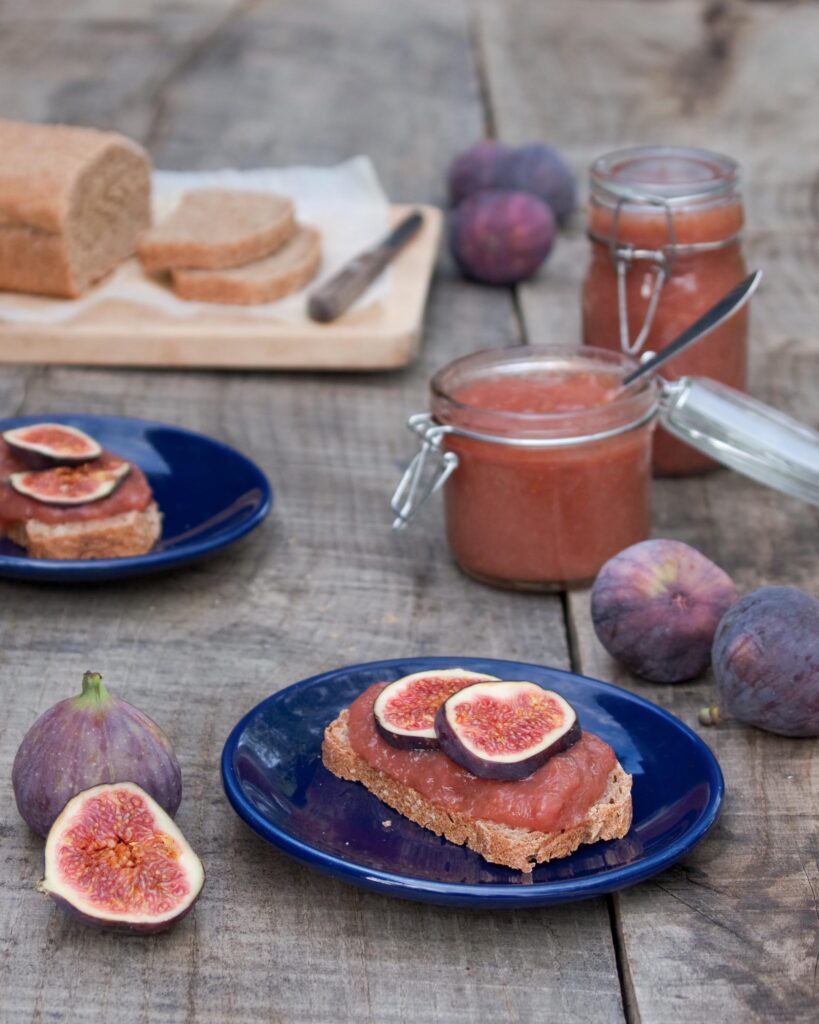
I add apples not because the jam would fail without them, but because they balance the flavor and contain natural pectin, which gives the jam a pleasantly thick, spreadable texture. Their flavor doesn’t overpower the figs.
You can also make the jam with figs only. In that case, add a little more water or grape juice at the beginning so the fruit doesn’t stick. The finished jam will have a stronger fig flavor and may be slightly thicker.
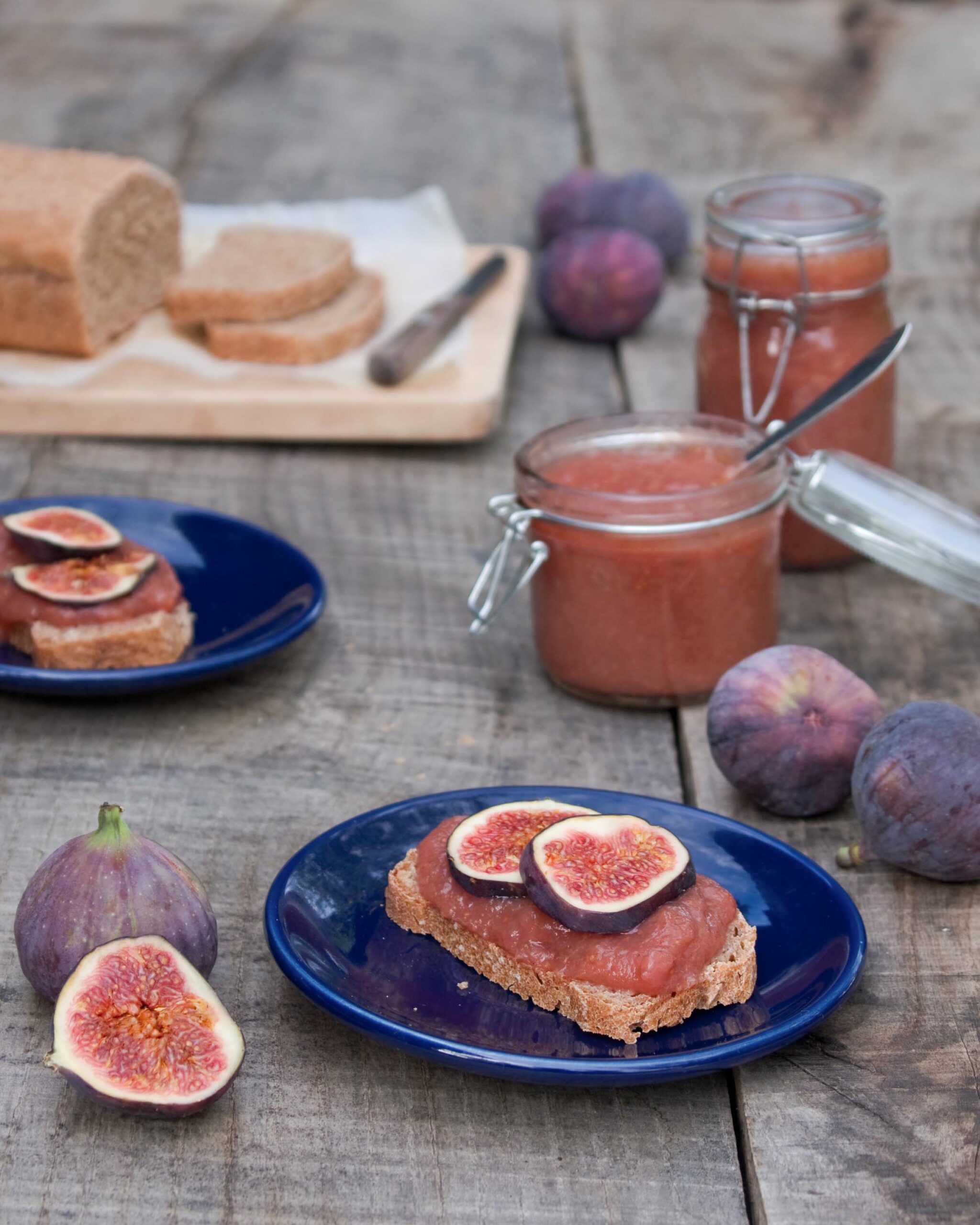
Fig Jam Without Added Sugar
Ingredients
- 2 kg ripe figs
- 1.5 kg apples
- 250 ml 100% grape juice or water
Instructions
- Wash the figs and apples thoroughly, then cut them into small pieces.
- Place the prepared fruit in a large pot and add the grape juice or water. The liquid will help prevent the fruit from sticking to the bottom of the pot at the beginning of cooking.
- Cook for 15–20 minutes, stirring occasionally, until the fruit is completely soft.
- Blend the cooked fruit with an immersion blender until you reach your desired consistency. You can also carefully transfer it to a regular blender.
- Immediately pour the hot jam into clean, dry jars.
- Fill each jar completely to the top and make sure there are no air bubbles trapped inside. Gently tap the jars on the work surface or stir the jam carefully to release any bubbles.
- Close the jars tightly and place them in a deep baking tray.
- Pour enough water into the tray to reach approximately one finger high around the jars.
- Pasteurize the jars in the oven at 80°C for 45 minutes.
- Turn off the oven and leave the jars inside with the oven door closed so they can cool down slowly. The easiest option is to leave them in the oven overnight.
- Once completely cool, store the jars in a dark, dry place.
Notes
- Choose figs that are ripe, soft and sweet, but not overripe. Do not use figs that smell sour or fermented, as this may cause the jam to ferment during storage.
- Make sure the jars and lids are completely clean.
- Fill the jars all the way to the top to minimize the amount of air inside.
- Close the jars tightly and pasteurize them immediately.
- Allow the jars to cool slowly in the closed oven. Alternatively, wrap them in a blanket and leave them to cool gradually.
- Once opened, keep the jam in the refrigerator and use it within a few days.
- You can use water instead of grape juice. Grape juice gives the jam a slightly fuller flavor, but both liquids help prevent the fruit from sticking at the beginning of cooking.
- Frozen figs can be used directly from the freezer. There is no need to thaw them first, but the cooking time will be slightly longer.
Tips for making fig jam
Choosing the best figs
Choose figs that are fully ripe, soft and naturally sweet. Avoid fruit that’s damaged or smells sour or fermented. Don’t use figs that show any sign of mold or decay.
How to store fig jam
Properly pasteurized fig jam keeps in a dark, dry place for several months. Before storing each jar, check that the lid has sealed properly. It shouldn’t move or make a clicking sound when you press the center.
Once opened, keep the jam in the fridge and use it within a few days. Always serve it with a clean spoon.
How to use fig jam
This fig jam is delicious spread on bread or pancakes, stirred into plain yogurt or oatmeal, or used as a filling for pastries and other desserts.
One of my favorite ways to serve it is with whole-grain spelt pancakes. It also makes a lovely topping for a cornmeal bake like my gluten-free sour cherry bake, or a filling for cookies and croissants. You can even put it on a cheese board.
Fig jam FAQ
Can I make a smaller batch?
Yes. Just reduce all the ingredients in the same proportion. For half the recipe, use 1 kg of figs, 750 g of apples and 125 ml of grape juice or water.
Can I use frozen figs?
Yes. Add frozen figs straight to the pot without thawing them first. They release more liquid as they heat, so the cooking time may be a little longer, but the jam will still be delicious.
Can I use water instead of grape juice?
Yes. Grape juice gives the jam a slightly fuller, naturally sweeter flavor, but water works just as well. Both stop the fruit from sticking to the bottom of the pot at the start of cooking.
Can I use overripe figs?
The best figs for this jam are ripe, soft and sweet. Don’t use figs that smell sour or fermented, or that show any sign of mold or decay.
Do I need to pasteurize the jam?
If you want to keep the jam in your pantry for several months, it needs to be properly preserved. If you’re making a small amount and plan to keep it in the fridge and eat it within a few days, you don’t need to pasteurize it.
Why is there no preserving sugar in this recipe?
Ripe figs are naturally sweet, and apples contain natural pectin that helps the jam thicken. That lets the flavor of the fruit stay at the center of the recipe, without any preserving sugar.
What about you?
Do you make homemade fig jam? Do you add anything special, or do you like to keep it as simple as possible? I’d love to hear about it in the comments.
If you make this fig jam, send me a photo at hello@naturallyindulgent.com. I’d be delighted to add it to the Naturally Indulgent community gallery.
By sending a photo, you agree that I may publish it on the Naturally Indulgent website.
More seasonal fruit recipes to try
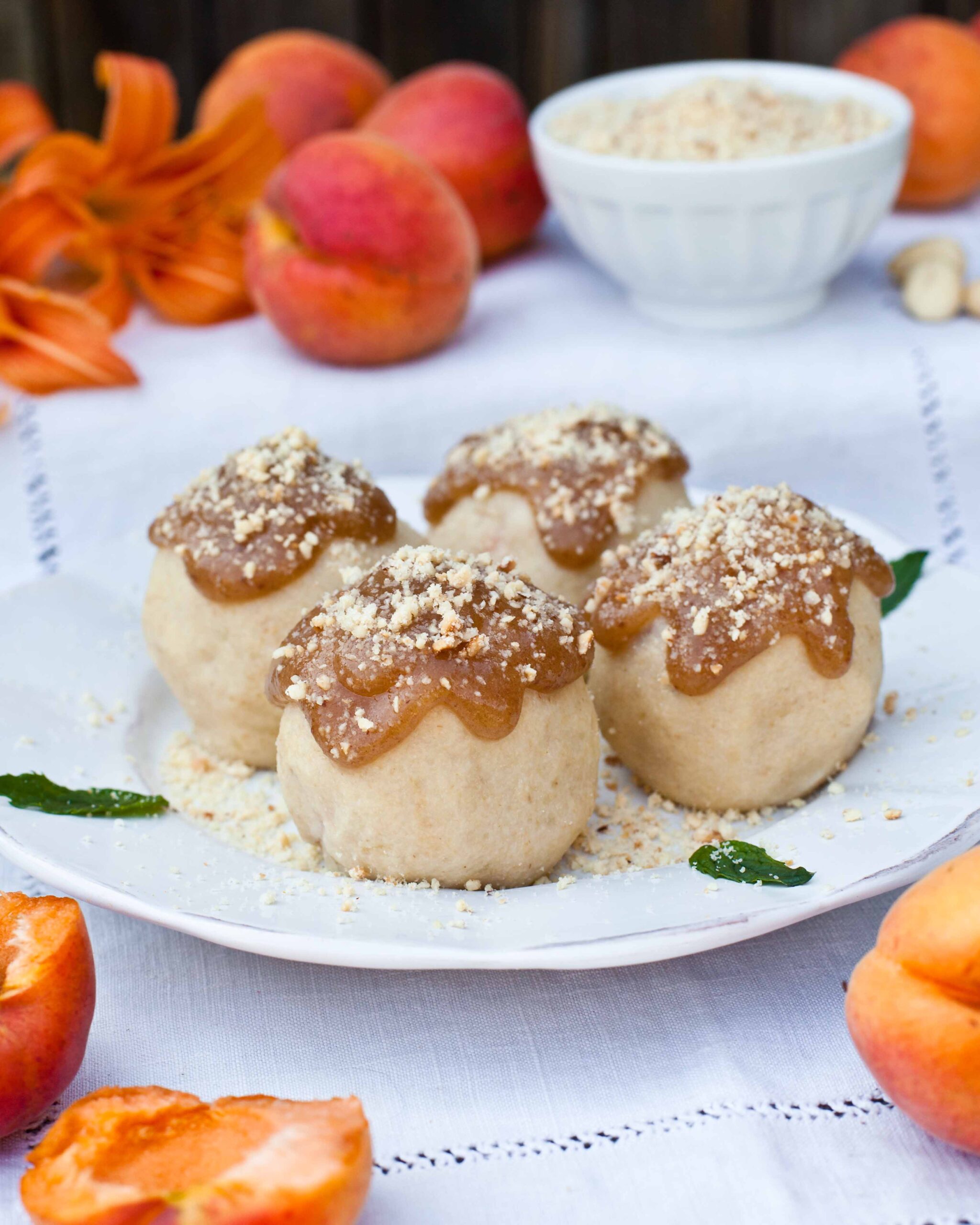
Apricot Dumplings with Whole Grain Flour (Egg-Free)
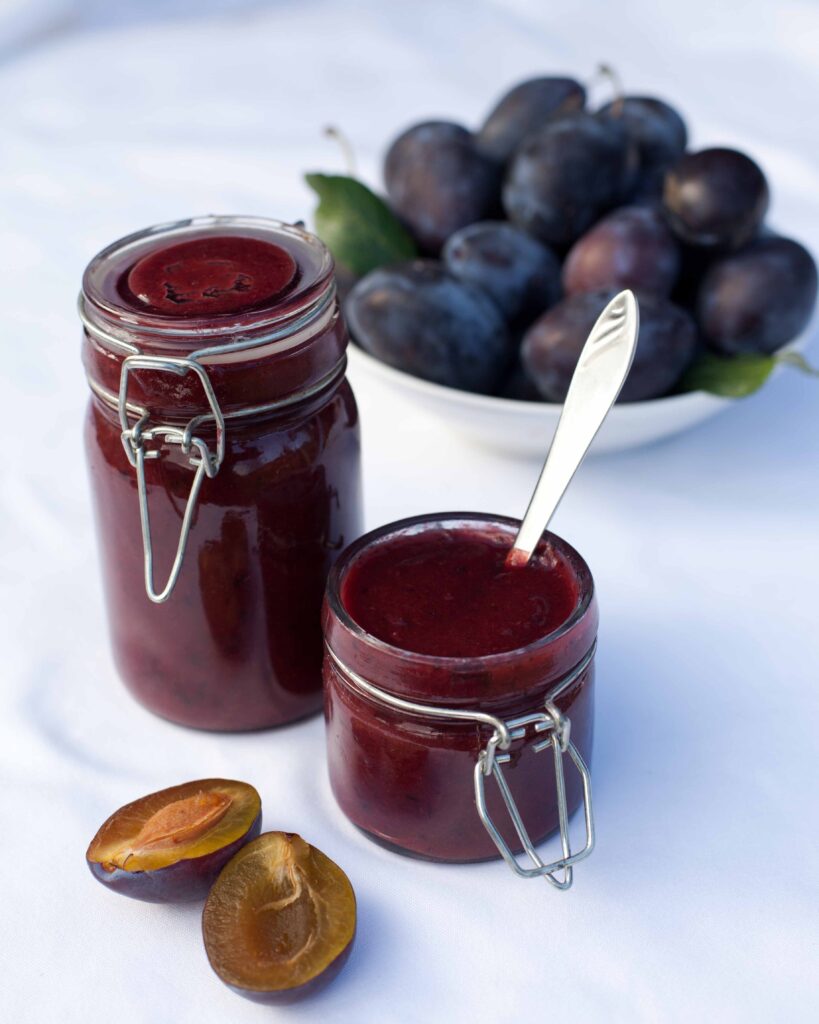
Easy Oven-Baked Plum Jam (No Added Sugar)