
Kamut Flour: Why I Recommend It and How to Bake With It
Do you sometimes feel not-so-great after eating store-bought bread, pastries or other baked goods?
Bloating, a heavy feeling in your stomach, digestive discomfort … And who’s usually first on the list of suspects? Gluten, of course. 😊
Gluten is talked about so much these days that it can feel like everyone should be cutting it out.
But is gluten really always to blame?
Bread, pasta and pastries are such a big part of our diet that many people can’t imagine life without them. And when you start to notice that ordinary baked goods no longer agree with you, you quickly find yourself asking: So what can I even eat now?
Then the search begins for substitutes, gluten-free products and special flour blends, which often aren’t exactly cheap.
But getting started doesn’t have to be complicated, and kamut flour is a great place to begin.
If you don’t have celiac disease, a wheat allergy or another medical reason to avoid gluten or wheat, a simple first step toward more whole grain eating can be this:
try baking at home with whole grain kamut or spelt flour.
That’s also my first recommendation for anyone who wants to start whole grain baking but isn’t sure how to begin.
Why kamut and spelt?
Because, in my experience, they’re a great introduction to whole grain flours. Both contain gluten, so they’re generally easier to work with than gluten-free flours. And with a good, tested recipe, you can make wonderful homemade bread, pastries and desserts with them.
You don’t need to start by combining different gluten-free flours or learning special dough techniques.
Above all, whole grain baking shows you that you don’t need white flour to make delicious homemade baked goods.
In my own desserts, I especially love using whole grain kamut flour.
Below I’ll explain why, how it differs from spelt, and how you can use it too.
What is kamut flour?
Kamut is an ancient type of wheat, also known as khorasan wheat. It comes from the Fertile Crescent region and is often linked with Egypt as well.
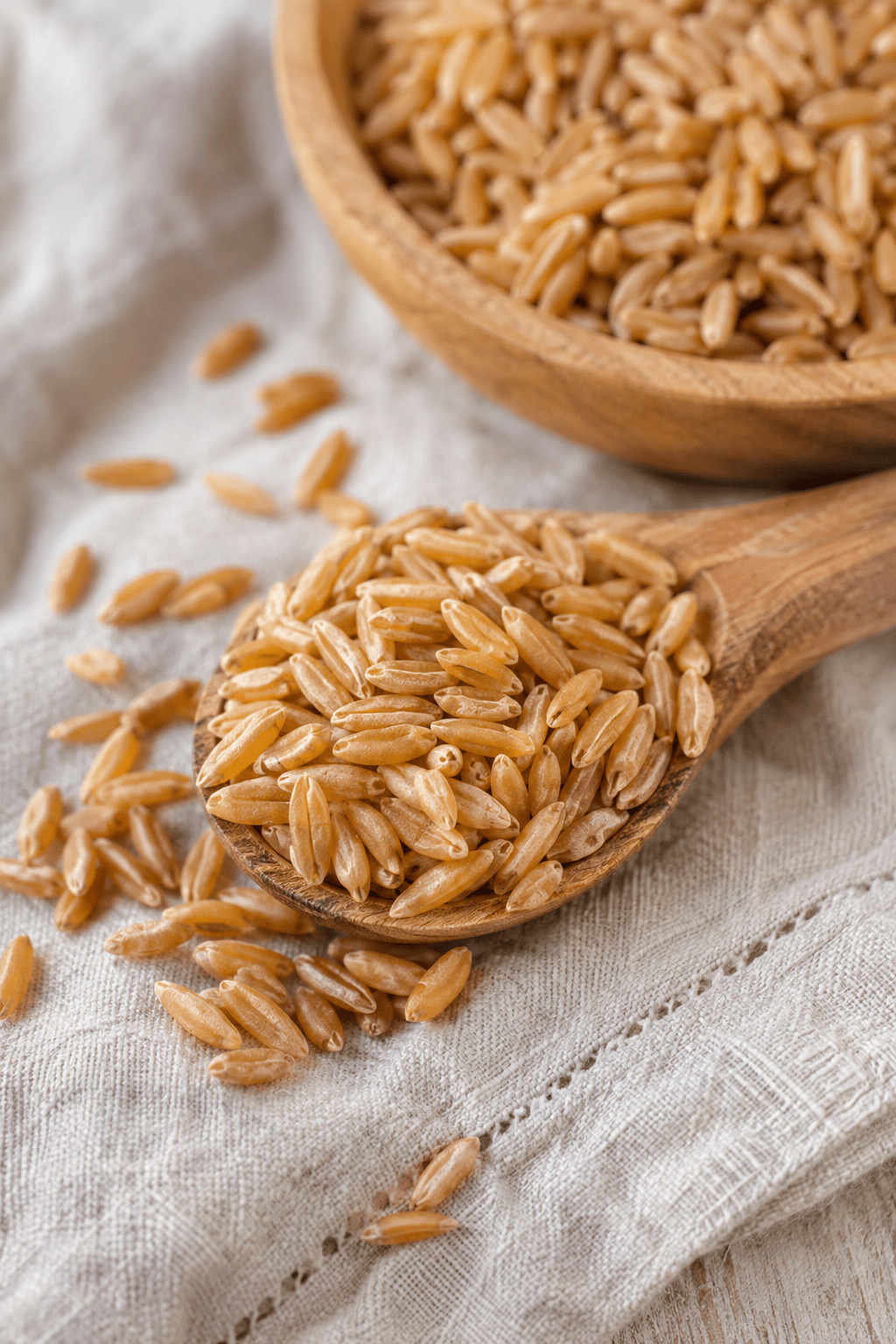
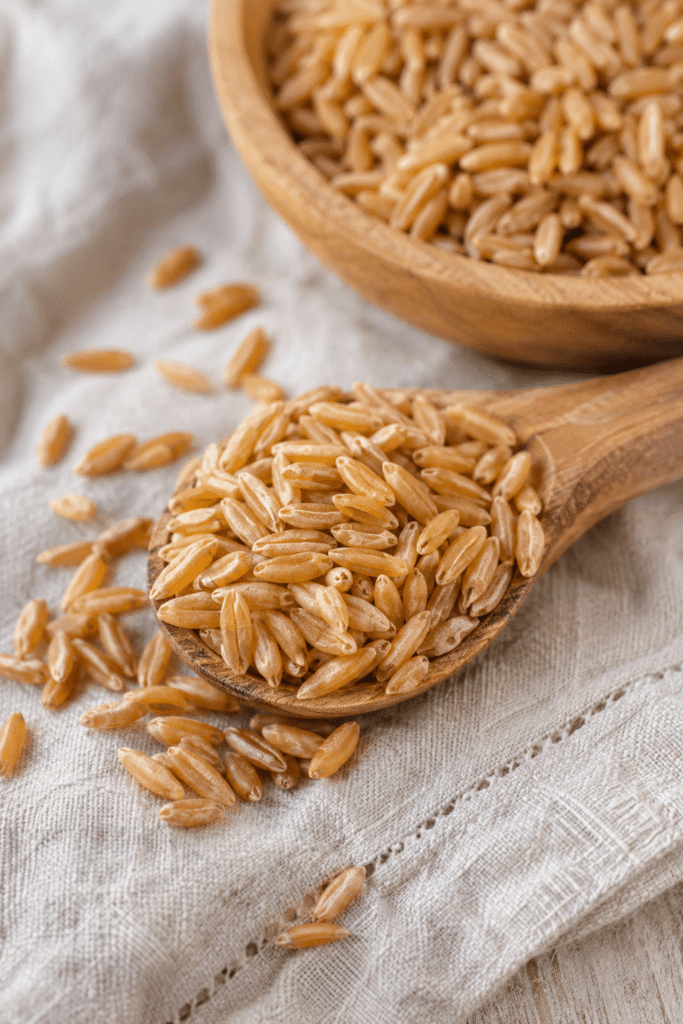
Like spelt, it’s one of the ancient wheats. Its kernels are much larger than those of common wheat, and the flour has a distinctive golden-yellow color.
Whole grain kamut flour is made from the entire grain, so it includes the bran and germ, which are mostly removed when white flour is made.
That means it keeps the dietary fiber and many of the nutrients naturally found in the grain.
Kamut contains gluten, so it isn’t suitable for people with celiac disease or a wheat allergy. But for anyone who can eat gluten and wants to include more whole grains in their diet, it can be an interesting choice for home baking.
Why do I prefer kamut to spelt for desserts?
If you follow my recipes, you’ve probably noticed that I very often use whole grain kamut flour in desserts.
And I often get asked: why kamut and not spelt?
The answer is actually very simple. Because I want whole grain desserts to taste like real desserts.
Kamut flour has a mild, slightly buttery and naturally somewhat sweet flavor. That’s why, in my experience, desserts made with it don’t have that “health food” taste many people associate with whole grain baking.
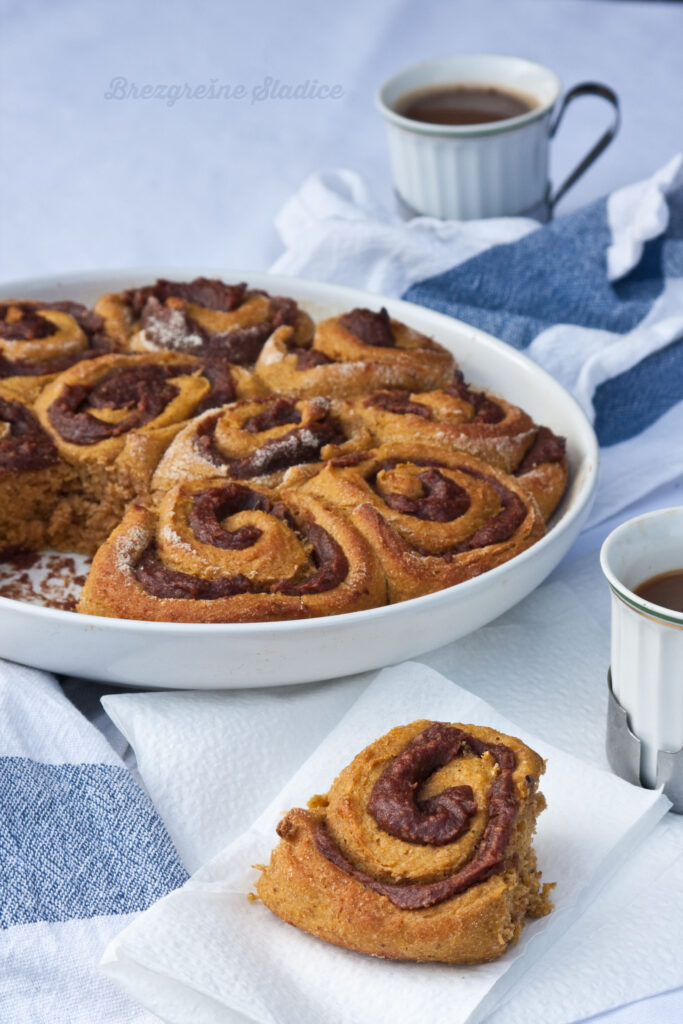
I also love its color. Kamut flour has a distinctive golden tone, so desserts made with it are often lighter and more golden than those made with whole grain spelt or wheat flour.
Spelt flour has a stronger, nutty, earthy flavor. I love using it too, mostly for bread, pies, yeasted dough and other savory dishes.
But when I bake desserts, I almost always choose kamut. I want the flavor of fruit, vanilla, poppy seeds or chocolate to come through, not the flavor of the flour.
And that’s one of the core ideas behind my baking.
Whole grain desserts can be nourishing and so delicious that nobody would guess they’re made with whole grain flour.
Kamut vs. spelt: a quick comparison
🟨 Kamut
✔ mild flavor
✔ slightly buttery
✔ great for desserts
✔ larger kernels
🟫 Spelt
✔ nutty flavor
✔ great for bread
✔ smaller kernels
✔ stronger flavor
🟨 Kamut |
🟫 Spelt |
|
✔ Mild, slightly buttery flavor |
✔ Stronger, nutty flavor |
How to bake with kamut flour
If you’ve mostly baked with white flour so far, it’s good to know that whole grain kamut flour behaves a little differently.
That doesn’t mean it’s hard to work with. Quite the opposite! 😊 In my experience, kamut flour is a great choice for your first steps in whole grain baking.
Can I simply swap white flour for kamut flour?
Not quite. Whole grain kamut flour usually needs more liquid than white flour, so you can’t swap it 1:1 in every recipe and expect the same result.
When making dough, keep in mind that the flour keeps absorbing liquid while it rests. This matters especially for yeasted dough, where a dough that’s too stiff can affect the rise and, in the end, how soft the baked goods turn out.
That’s why I always recommend that beginners start with a recipe that has already been developed and tested with whole grain flour.
Once you get a feel for the dough and understand how whole grain flour behaves, you can start adapting your own favorite recipes.
Can I replace kamut flour with spelt or wheat flour?
Of course! 😊
If you don’t have kamut flour at home, you can replace it with whole grain spelt flour in most of my recipes.
The two flours behave quite similarly when baking. In my experience, the texture of the baked goods is almost the same; the biggest difference is in flavor and color.
Kamut flour has a milder, naturally sweeter flavor, while spelt is stronger and nuttier.
If you don’t have spelt flour either, you can use whole grain wheat flour in many recipes.
Still, it’s worth knowing that flours differ a little, so some small adjustments may be needed.
I personally choose kamut for desserts, but that doesn’t mean you can’t make great homemade baked goods without it.
Does kamut flour contain gluten?
Yes, kamut flour contains gluten. Like spelt, kamut is a type of wheat, so it isn’t suitable for people with celiac disease or a wheat allergy.
I also often hear from people who don’t have celiac disease but notice that they don’t feel great after ordinary bread, pastries and other baked goods.
That’s exactly why I think it’s important to say that gluten isn’t always the only thing responsible for such problems. What kind of product we eat, what it’s made from and how our body responds to it all matter too.
I personally don’t believe everyone should cut out gluten for no reason. It seems far more important to me to learn to choose quality ingredients and to make more of our food at home.
If you don’t need to avoid gluten or wheat for medical reasons, whole grain kamut flour can be one way to start exploring home whole grain baking.
Where can I buy kamut flour?
This is another question I get very often. 😊
Look for it in health food stores, bulk-food shops or online shops that sell flours and grains. It’s often labeled “khorasan” as well.
Even better, I buy whole kamut kernels and grind them at home just before baking, since I have a grain mill.
In my experience, freshly milled flour has a richer aroma and flavor, which is why I especially like using it for desserts.
If you don’t have a mill, don’t worry. Good-quality pre-ground whole grain kamut flour is a great choice too. What matters most is choosing whole grain flour if you want to bake with the whole grain.
When gluten-free baking is even easier
Kamut and spelt are, in my experience, a great start if you’re only getting to know whole grain baking. In my kitchen, I also love using buckwheat, millet, oat and other gluten-free flours.
They behave quite differently from kamut or spelt flour when baking, so it’s good to first get to know their properties and learn how to use them.
And do you know what I’ve discovered over the years of developing recipes? That making some desserts with gluten-free flours can actually be easier than with whole grain flours that contain gluten.
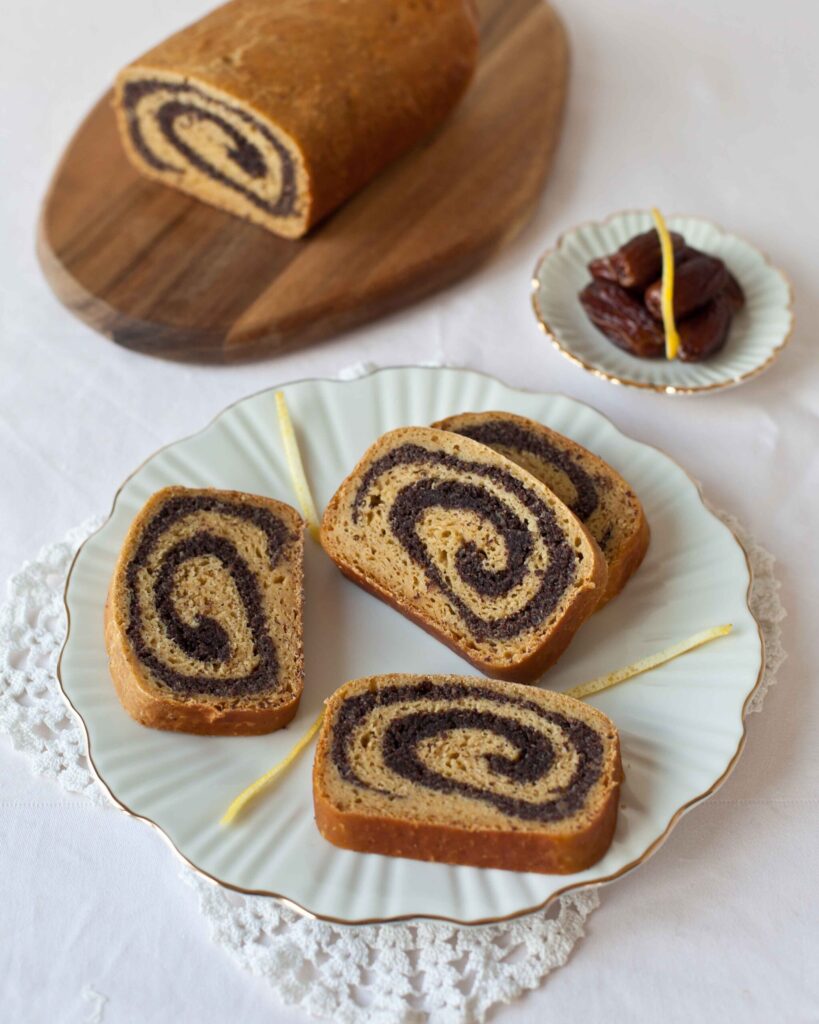
A good example is my gluten-free potica (a traditional Slovenian rolled sweet bread, here with a poppy seed filling).
Once I learned to use whole grain gluten-free flours properly, I realized that potica is actually much easier to make with them than with kamut flour.
In my experience, the dough is easier to shape and roll, and the whole process is simpler.
That’s one of those discoveries that make me love researching and developing new recipes so much. Sometimes something seems complicated only because we don’t yet know the right way to do it.
So if you’re only getting started with whole grain baking, I recommend beginning with kamut or spelt. And when you want to expand your knowledge to gluten-free flours, you’ll discover entirely new possibilities.
Frequently asked questions
Does kamut flour contain gluten?
Yes. Kamut is a type of wheat and contains gluten, so it isn’t suitable for people with celiac disease or a wheat allergy.
Can I replace kamut flour with spelt flour?
Yes. In most of my recipes you can replace kamut flour with whole grain spelt flour. In my experience, the texture of the baked goods is very similar; the biggest difference is in flavor and color.
Can I use regular white flour instead of kamut?
That’s not always the best solution. Whole grain kamut flour usually needs more liquid than white flour, so a 1:1 swap doesn’t guarantee the same result. You may need to adjust the amount of liquid.
Can I use kamut flour for bread?
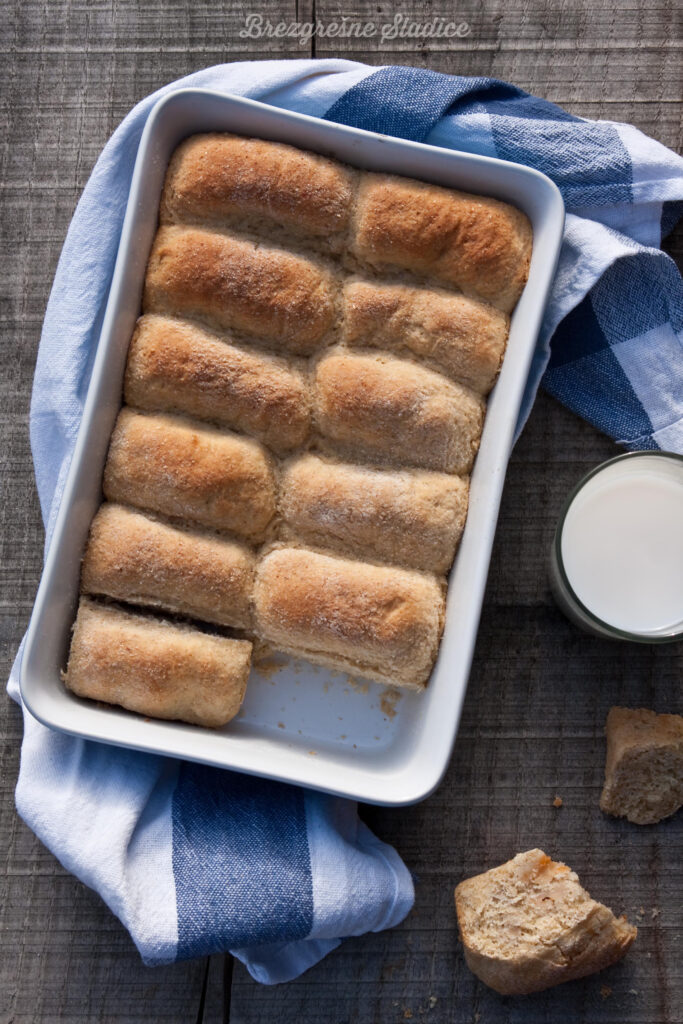
Of course! 😊 You can use kamut flour for bread, buns and other yeasted baked goods. I personally like it best in desserts, while for savory baking I often choose spelt.
What does kamut flour taste like?
Kamut flour has a mild, slightly buttery and naturally somewhat sweet flavor. That’s why I like it in desserts: it doesn’t overpower the flavor of fruit, poppy seeds, vanilla or chocolate.
Where can I buy kamut flour?
Look for it in health food stores, bulk-food shops or online flour and grain shops. Even better, buy whole kernels and grind them at home just before baking. If you don’t have a mill, good-quality pre-ground whole grain kamut flour works well too.
4 Comments